

Welcome to Folk England: FAQs
We’ve changed our public-facing name. We used to be EFDSS. We’re now Folk England.
What has changed?
Our trading name for English Folk Dance and Song Society (EFDSS) is now Folk England.
New name; same organisation for folkies and lovers of the folk arts. While we’ve changed our look, our commitment to the folk arts for everyone remains at the heart of everything we do.
So, the charity’s remit will stay the same?
Yes. We will not be changing what we do; we will continue to cover the folk arts – primarily music, song and dance – in the geographical location of England. This is, and will remain, our remit as a charity.
We will continue to cherish the early folk collections, and to champion English folk music, song and dance that celebrates our traditions, while recognising that folk is an evolving art form. However, this is only part of the story. Our work also celebrates the rich diversity of folk practices that have roots in tradition and are taking place in communities across England today, including creative partnerships that bring English folk arts into dialogue with traditions which originated in other places. For some years, we have been exploring these connections through the range of partners, artists and organisations we’ve been working with and projects such as Bhangra Ceilidh, created with Kuljit Bhamra MBE. Our new name, Folk England, reflects this open, inclusive approach and gives us the freedom to continue evolving, welcoming everyone to be part of the story.
This is a trading name change – our charitable objects, membership, activities, day-to-day operations, values and commitment to folk arts are still fit for purpose and remain the same. Members don’t need to take any action: existing membership details, contact information, and payment arrangements will continue as normal.
What will this change mean, with reference to the legal name vs the trading name?
Our registered legal name remains English Folk Dance and Song Society (EFDSS), under which we are registered with Companies House. Folk England is our trading name and the name we use publicly across our branding, marketing and communications.
In everyday use, we are Folk England. However, for formal purposes, including contracts, invoices, banking and tax matters with HMRC, we continue to use our registered legal name. Where required, official documents and invoices will also include our company number and registered address.
Our new look
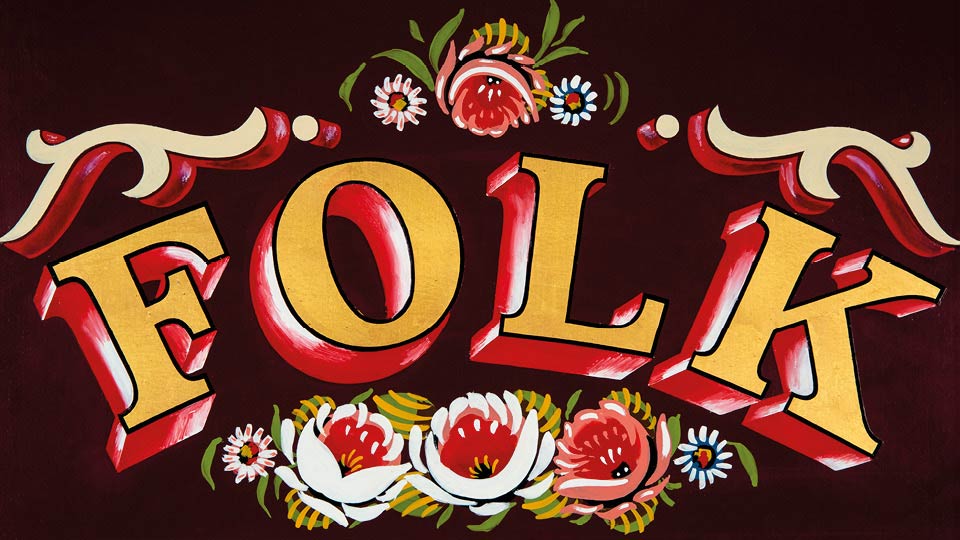
Our clearer, more inclusive name sets the stage for a bold, distinctive new brand identity. Folk England’s new design celebrates the character and diversity of folk arts in England, bringing tradition to life with a fresh, vibrant and contemporary feel.
The challenge was to honour our heritage while looking to the future. The result is an identity that reflects folk’s enduring relevance, opens the door to new audiences and invites more people to get involved, while staying true to the traditions and the communities who have them at their heart.
Folk England’s new visual identity strikes a balance between heritage and contemporary aesthetic, creating an identity that is elegant, timeless, bold, relevant and distinctive. The title flared serif typeface, Ashcroft was created in England in 2026 by the small independent type foundry Peregrin Studio, and combines a forward-looking style alongside paying homage to early 20th-century British lettering. The vibrant colour palette, with its mix of earthy folky tones with the zesty pink and green to pop, gives us a fresh new energy – making our new Folk England really stand out. The supporting graphic elements provide a strong foundation for a new visual system, with the image framing and border treatments giving Folk England extra character and flair.
What is Folk England?
Folk England is here to help keep the folk arts thriving, vibrant and evolving. From music, song and dance to storytelling and traditions, we champion the people and communities who bring folk to life at the heart of our rich and diverse cultural landscape.
As the national development organisation for folk arts in England, we believe folk is for everyone, creating inclusive opportunities to learn, perform, participate and explore.
We support artists, educators and practitioners through grants, bursaries and networking; encourage participation through classes, courses, training and youth programmes, including the National Youth Folk Ensemble; facilitate research and inspire through our library and archives; bring people together through gigs, dances, workshops, conferences and lectures; and share knowledge through our digital presence and publications, including English Dance and Song and Folk Music Journal.
Our home is Cecil Sharp House, a Grade II listed folk arts centre, one of very few buildings in the world built exclusively for folk music and dance, which incorporates the Vaughan Williams Memorial Library, our national folk library and archive. Although our HQ is in London, we work for folk all across England.
And we don’t do this alone. We collaborate with organisations across the arts, folk, education and heritage sectors, creating partnerships that embrace new people and bring new perspectives into folk.
Our story began in 1932, when the English Folk Dance Society and the Folk-Song Society merged to form the English Folk Dance and Song Society. United by a shared passion, we set out to preserve, promote and develop the English folk arts. We became a registered charity in 1963, and in 2026, we adopted the trading name, Folk England, reflecting our ongoing commitment to keeping folk evolving for everyone.
Rooted in England and connected worldwide, our community includes around 3,000 Folk England members, a digital audience of 187,000 and 40,000 yearly in-person audience members and participants who share our passion for folk and help us keep the culture and tradition thriving.
Why have you changed your trading name?
For some, English folk is defined by ideas rooted in the early 20th century. But folk is never static: it belongs to the people, and it evolves with them. Today, it draws on tradition while reflecting the changing cultures, communities and influences that shape life in England. We needed a new name that reflects this, and is more comprehensive and contemporary – embracing the past and making it clear that folk is for everyone, now and into the future.
Our former name, the English Folk Dance and Song Society, was long, difficult to say and often suggested a narrow focus on traditional, historical English folk music and dance. This created a barrier for people who felt our work wasn’t for them. While we’ve worked hard to challenge this perception through diverse partnerships, artists and projects, our name needed to catch up. Folk England reflects who we are today: open, vibrant and inclusive. Folk England sends a clear message: everyone is welcome, and there’s a place for everyone in folk.
Are you still building a new website?
Yes, this will follow in early 2027.
